
Every "pixie or bob" article on the internet shows the same two glossy photographs side by side and lets you decide based on which picture you like better. That is not a comparison — it is a coin flip dressed up as content. The actual decision between a pixie cut and a short bob has almost nothing to do with which style photographs better on a stranger and everything to do with how each one renders against your specific face shape, your hair's actual texture, the time you have for styling on a Tuesday morning, and how you feel about your reflection during the eight-month stretch where the cut is growing into something else entirely. Hairelle Fashion built this comparison around those rendering conditions instead of around aesthetics alone, because the cut that looks best in a photo is not always the cut that looks best on you, three weeks after the appointment, styled by your own hands.
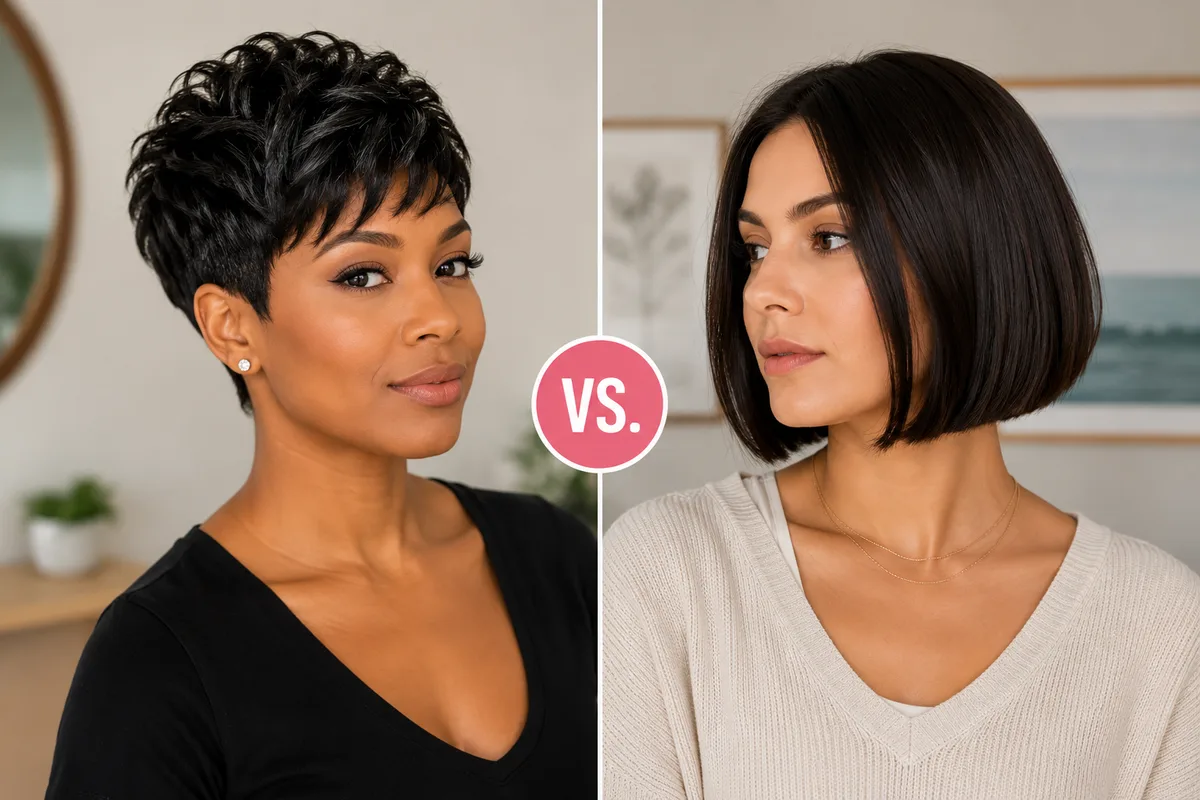
A pixie and a short bob start from different structural premises, and that difference cascades into everything else about how the cut behaves. A pixie is built short and close at the sides and back with length and texture concentrated on top, which means the cut relies on precise shaping rather than length to hold its form — every layer transition has to be exact because there is no length left to hide an uneven line. A short bob, by contrast, keeps a consistent perimeter length that grazes the jaw or collarbone, which gives it more forgiveness in the cutting itself but introduces a different dependency: the blunt or graduated line at the bottom has to stay sharp, or the whole shape starts to look shaggy rather than intentional.
This structural distinction is why a stylist's technical skill matters more for a pixie than for almost any other cut — precision errors that would be invisible in six inches of hair are obvious in half an inch. A short bob is more tolerant of small technical variation because the length itself does some of the visual work. When you are choosing between the two, ask your stylist directly which cut they perform more often and look at their portfolio specifically for pixies, not just short hair in general, since the two structures do not reward the same expertise equally.
For results-focused hairstyle guidance built around how a cut actually behaves in real life, visit Hairelle Fashion for the full pixie cut versus short bob breakdown.
Face shape guidance for short hair gets treated as a formality in most articles — a paragraph that lists five face shapes and assigns each one a verdict, and then moves on. But for cuts this short, face shape is not a minor styling variable; it is close to the entire equation, because there is no length available to visually balance proportions the way a longer cut can. A pixie exposes the jawline, cheekbones, and forehead more directly than almost any other haircut, which means it rewards oval and heart-shaped faces that already have balanced proportions and requires more deliberate styling adjustments — asymmetric fringe, longer side pieces — for round or square faces where the cut can otherwise emphasize width.
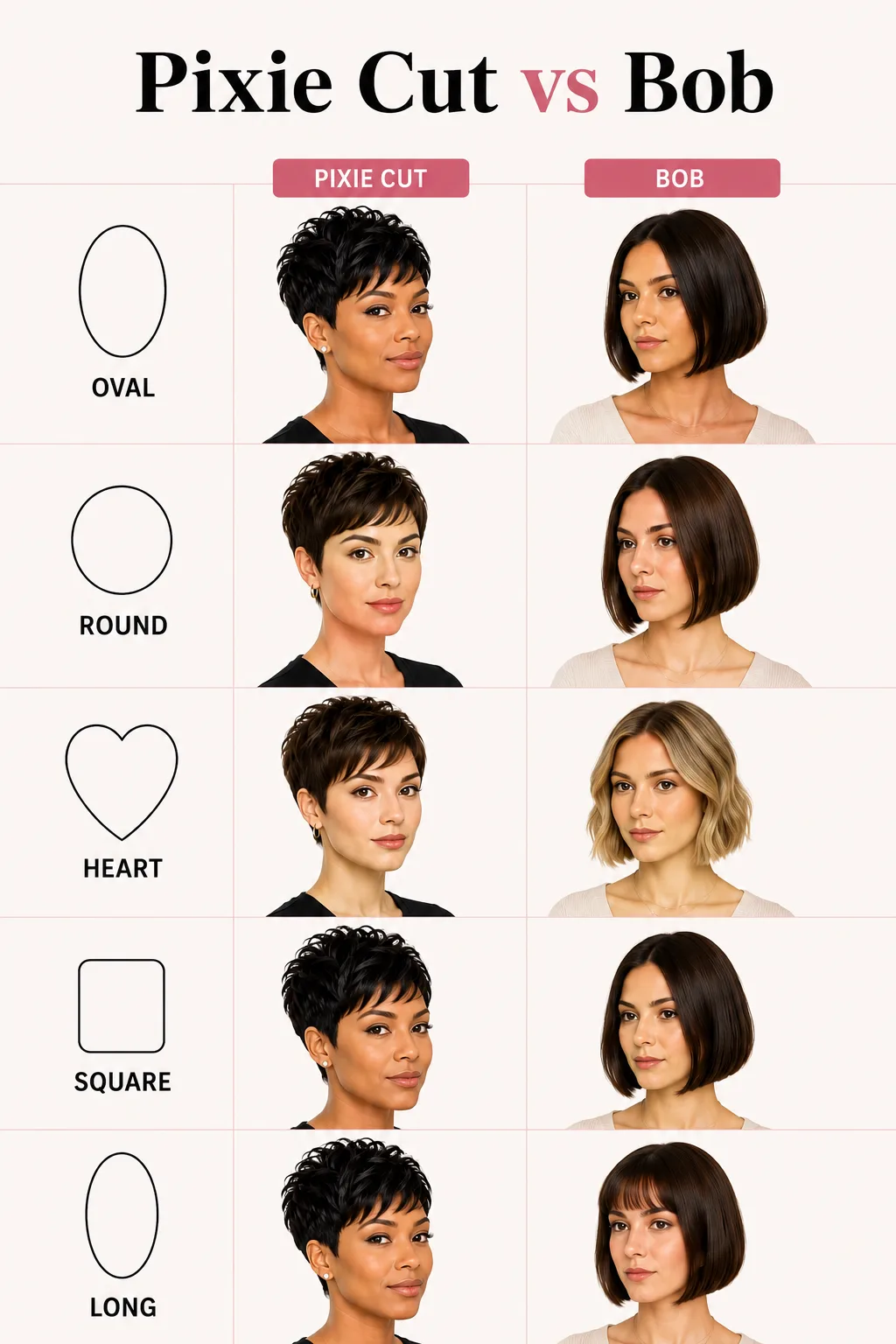
A short bob is comparatively more forgiving across face shapes because the length at the jaw can be angled forward or back to add or subtract visual width exactly where it is needed — a longer front angle narrows a round face, while a blunt horizontal line adds width to a longer face. This is not a reason to default to a bob out of caution; it is a reason to have an honest conversation with your stylist about which specific adjustments your face shape needs within whichever cut you choose, rather than assuming the base version of either style will automatically suit you.
Texture changes the outcome of both cuts more than most before-and-after photos let on, because those photos are almost always taken on hair that was freshly styled by a professional, not on the texture as it behaves naturally at home. Curly and coily hair shrinks upward as it dries, which means a pixie cut length has to account for that shrinkage or the cut will end up shorter than intended once it air-dries — a mistake that shows up as "why does my pixie look nothing like the photo" a day after the appointment. A short bob on curly hair needs a similar shrinkage allowance, but has more length to absorb the miscalculation before it becomes a problem.
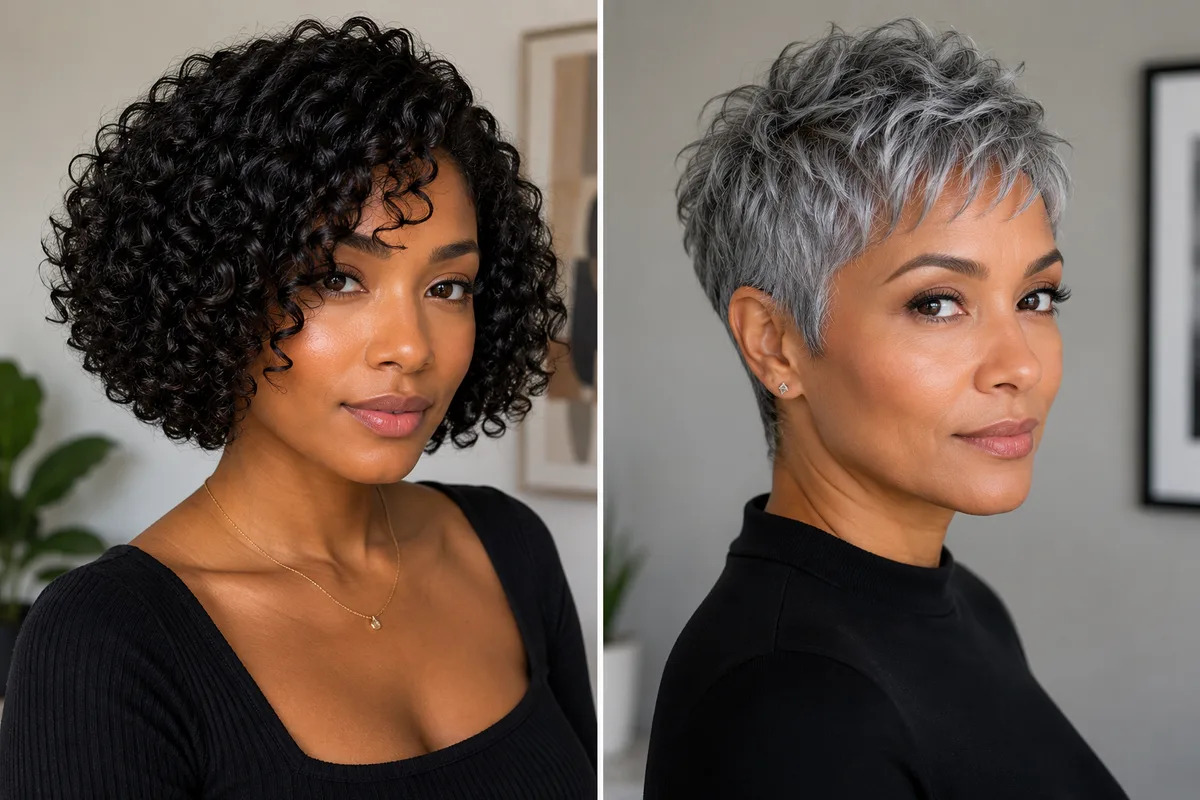
Fine, straight hair behaves almost opposite to curly hair in this comparison: a pixie on fine hair needs internal texturizing to avoid looking flat and helmet-like, while a short bob on fine hair benefits from a blunt line that creates the illusion of thickness through visual density at the ends. Gray and white hair introduces its own variable, since gray strands are often coarser and more resistant to lying flat than pigmented strands, which can make a pixie's precise lines harder to maintain between salon visits and may push some readers toward a bob's slightly more relaxed maintenance tolerance.
The maintenance difference between a pixie and a short bob is the single most underreported factor in comparison content, and it is also the one that determines whether you will still like your cut six months from now. A pixie's precision-dependent structure means it needs a trim every four to five weeks to keep its shape intact — go longer than that and the cut does not gracefully transition into a slightly longer pixie, it transitions into an ungroomed, in-between stage that most readers describe as the hardest part of wearing short hair. A short bob stretches to six to eight weeks between trims because its length gives it more room to grow before the shape visibly degrades.
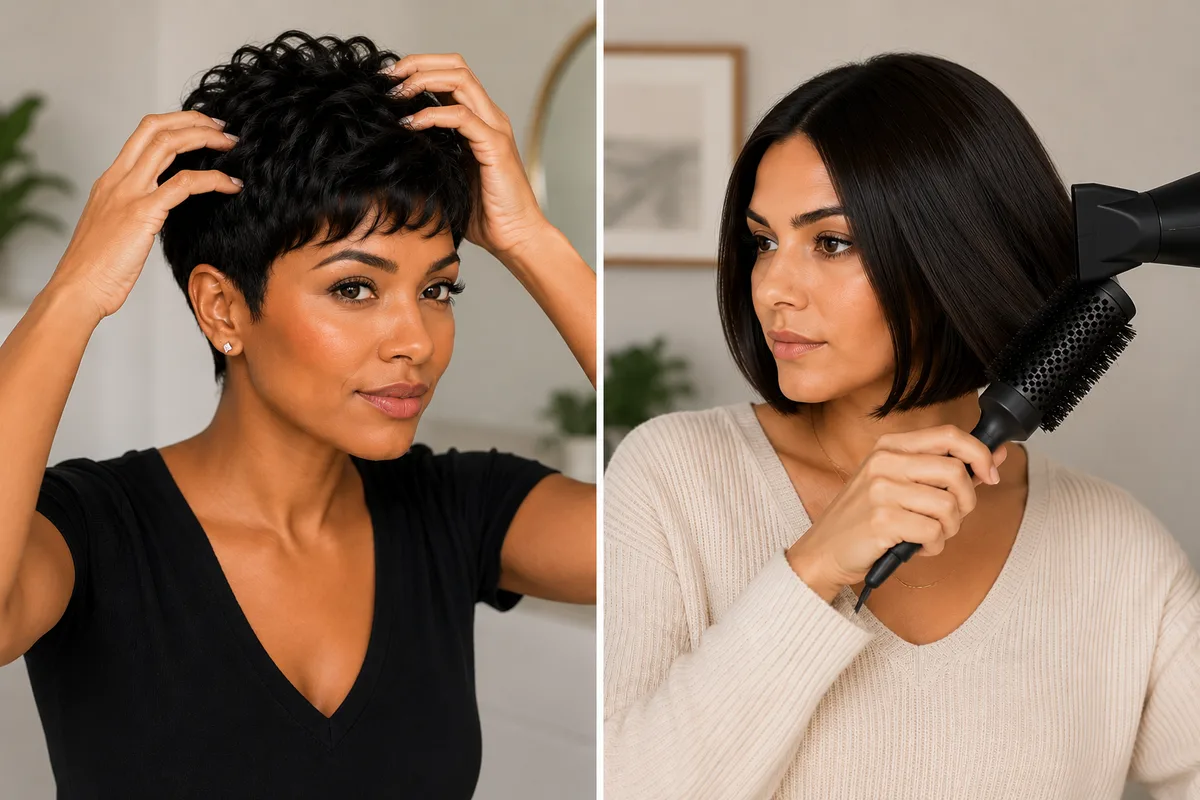
Annualized, that trim frequency difference plus the styling time difference adds up to a real cost and time gap between the two cuts — a gap that most comparison articles never quantify because it requires actually tracking appointments and routines rather than describing the cuts in the abstract. If your budget or your schedule is a genuine constraint on your decision, weigh the trim frequency as heavily as you weigh the look itself, because the cut you cannot afford to maintain properly will not look like the photo for very long regardless of which one you chose.
For more results-focused comparisons built on real maintenance data rather than photo appeal alone, see more from this same editorial standard.
Every short haircut eventually grows out, and the grow-out phase is where the pixie versus bob decision gets tested most honestly, because it is the one part of owning either cut that no glossy before-and-after photo ever documents. A pixie's grow-out follows a fairly predictable arc: the first month is the cleanest version of the cut, months two through four introduce the awkward transitional length at the nape and around the ears that most pixie-wearers find the hardest stretch, and by months eight to nine the cut has generally grown into bob-adjacent length, at which point many readers choose to get their first "grow-out bob" cut to clean up the transition rather than letting it continue unchecked.
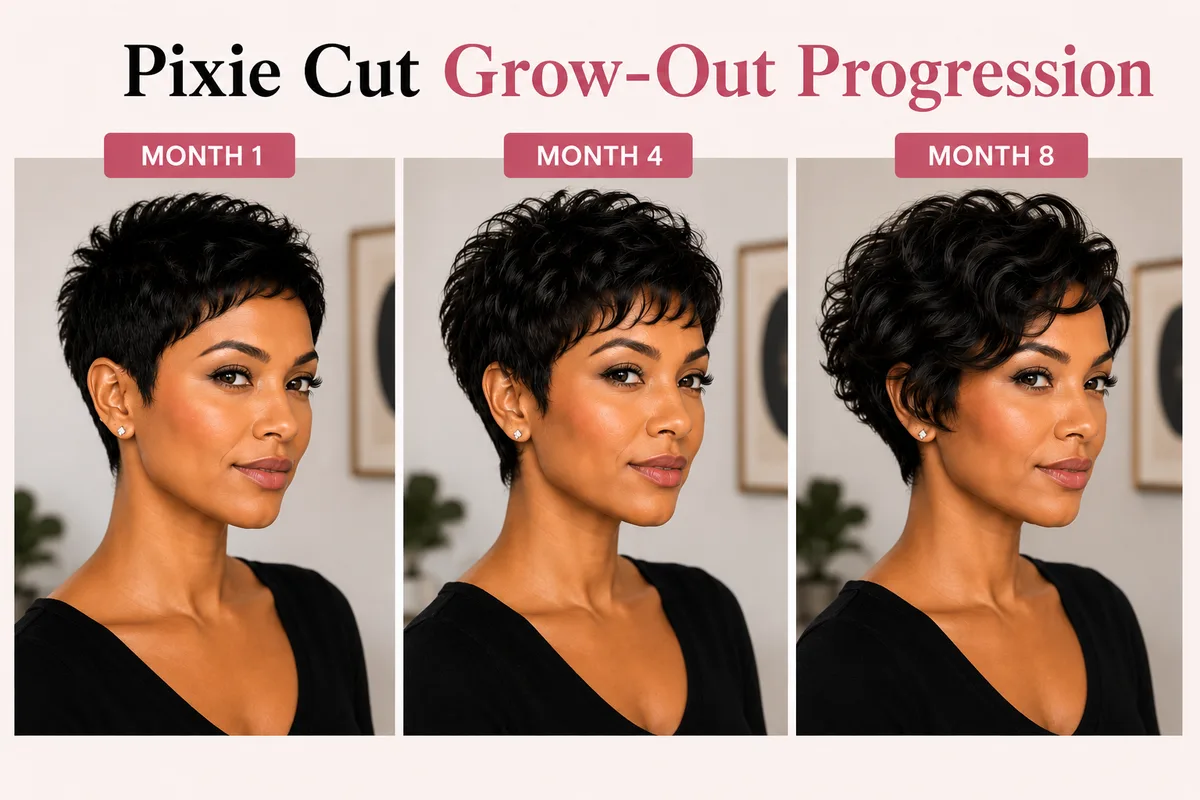
A short bob's grow-out is comparatively gentler because the cut was already closer to a medium length, so the transition reads as "your hair is getting longer" rather than "your haircut is falling apart," which is a meaningfully different psychological experience for many readers during the growing-out period. If you know you tend to regret short cuts around the two-to-three month mark, this grow-out difference alone may be reason enough to start with a short bob rather than a pixie, since the bob gives you a softer landing if you decide you want length back sooner than planned.
For additional hairstyle comparison content and grow-out guidance, find out more on this results-focused hair resource.
The single highest-leverage thing you can do to make sure either cut renders correctly on your head is to communicate the right information to your stylist before the scissors come out, rather than relying on a reference photo alone. Bring the reference photo, but also tell your stylist your natural texture and how it behaves when air-dried versus styled, how many minutes you actually spend on your hair each morning, and whether you are choosing this cut for a special event or as a long-term everyday style — each of these answers changes what your stylist should actually do differently from the reference photo to get a comparable result on your hair rather than a technically accurate copy of a cut that was designed for different hair.
This is the difference between a hairstyle resource that shows you pictures and one that helps you achieve results: the pictures are a starting point for a conversation, not a guarantee of an outcome, and the conversation is where the theoretical comparison between a pixie and a short bob becomes a specific, personal decision about which cut will actually look and feel the way you want it to once it is rendered on your own head, in your own bathroom, on an ordinary morning.